

Quality, Care, and Lasting Protection for Every Home and Business.
- Comprehensive Roofing Services
- Experienced, Local Team
- Top-Quality Materials & Workmanship
- Exceptional Customer Service
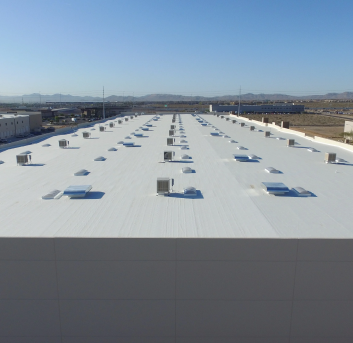
Running a commercial property in Avondale Estates means dealing with some of the most demanding weather conditions in the Southeast. Summer temperatures regularly push into the 90s, UV exposure beats down on flat and low-slope membranes for months, and afternoon thunderstorms roll through with enough rain to test every seam, drain, and flashing on your roof. High humidity slows the drying process after heavy rain, giving any moisture that gets through more time to spread into your insulation and roof decking. Temperature changes between warm days and cooler nights cause roofing membranes to expand and contract repeatedly, which can lead to cracking and seam separation over time. When drainage gets blocked by the leaves and debris that are common throughout the Atlanta metro, ponding water sits on the surface and accelerates the wear even further.
That kind of pressure adds up fast, and a roof that looks fine from the parking lot can already be failing at the seams, around HVAC curbs, or along parapet wall transitions. Waiting to address those weak points usually turns a straightforward repair into something far more involved. RST Roofing and Renovations, LLC works with building owners and property managers across Avondale Estates to identify where commercial roofs are failing and get the right repairs done before the damage spreads. Whether your facility has a modified bitumen, TPO, EPDM, or built-up roof, the goal is to protect your building, your tenants, and your investment with repairs that are done right the first time.
Commercial roof repairs require attention to the membrane, drainage components, flashing details, and equipment areas that can contribute to leaks. A thorough evaluation helps identify the actual source of the problem before repair work begins.
Commercial roofs in Avondale Estates face a specific set of conditions that tend to cause the same failure points again and again. Knowing what to watch for on your facility can help you catch problems early, before a small repair turns into a much larger one.
| Common Issue | Likely Cause | Why It Matters |
|---|---|---|
| Seam separation or cracking | Membrane expansion and contraction from repeated temperature changes | Open seams allow water to reach insulation and rof decking quickly |
| Ponding water | Blocked drains or scuppers from leaf and debris buildup | Standing water sitting more than 48 hours accelerates membrane wear |
| Flashing failure at parapet walls | Cracked caps and open joints along roof-to-wall transitions | One of the most common hidden leak points on commercial buildings |
| Membrane damage around HVAC curbs | Service traffic and settling at equipment gaps | Repeated foot traffic and curb movement breaks seals over time |
| Repeated patching in the same area | Underlying membrane failure that surface repairs cannot fully address | Multiple patches in one zone often signal a deeper repair need |
Georgia’s 2020 Energy Code also requires minimum R-25 continuous insulation for commercial roof assemblies, so repair planning sometimes needs to account for insulation compatibility. If repairs affect more than 25% of your roof area, DeKalb County commercial building permit requirements will apply, and RST Roofing and Renovations, LLC handles that process as part of the work.
Modified bitumen, TPO, EPDM, and built-up roofing systems each fail in different ways and require different repair approaches. RST Roofing and Renovations, LLC works with the membrane type already on your facility, so repairs are compatible with your existing system rather than creating new weak points.
Leaf drop and pollen buildup are ongoing issues on commercial roofs throughout the Atlanta metro, and blocked drains are one of the fastest ways to end up with ponding water and membrane damage. Clearing interior drains, scuppers, and gutters is included as part of the repair process so your drainage system is working the way it should when the crew leaves.
Reflective and cool-roof surfaces help reduce membrane stress during the long, hot summers common in this region. When repairs are made to a roof with a reflective coating or membrane, materials are matched to preserve that performance rather than leaving a patch that absorbs more heat than the surrounding surface.
After repairs are finished, RST Roofing and Renovations, LLC documents the work with photos so you have a clear record of what was done and when. That kind of documentation is valuable when storm-related damage comes up later, and you need to show the condition and repair history of your roof.
Between the long, punishing summers, frequent afternoon storms, and the slow-drying humidity that follows, commercial roofs in this area deal with conditions that wear down even well-maintained systems over time. Staying ahead of that wear protects your facility, keeps your tenants from dealing with disruptions, and extends the useful life of your roof so you are not facing a full replacement sooner than necessary. A repair handled at the right time costs far less than one deferred until the damage has spread into the roof decking or insulation below.
RST Roofing and Renovations, LLC is ready to help you get the right repairs done on your commercial property. If you have noticed a problem, had a recent storm roll through, or just want a set of experienced eyes on your roof before the busy season picks up, reaching out to our local team is a straightforward first step. We will tell you honestly what we find and what it takes to fix it.
Got questions about your roof? We’ve got answers. From maintenance tips to insurance claims and repair timelines, our FAQ section covers the most common concerns homeowners have. Get informed and make confident decisions about protecting your home.
Heavy pollen accumulation coats drains, scuppers, and gutters and binds with debris to form a paste that blocks drainage faster than leaves alone. On flat and low-slope roofs, that buildup can cause water to pond within a single storm cycle. Spring is a good time to have your roof drainage inspected before the afternoon thunderstorm season picks up in earnest.
Every time a technician accesses rooftop equipment, there is a chance that foot traffic, dropped tools, or equipment shifting at the curb can break the seal around gaps. Most of this damage is small and goes unnoticed until water is already getting through. Scheduling a roof inspection after any significant HVAC service visit is a simple way to catch those new weak points before they become a repair with a much larger scale.
When the same zone of a roof needs patching more than once or twice, the underlying membrane is usually breaking down in a way that surface repairs cannot fully stop. Each new patch covers the visible problem but does not address the wear happening below or beside it. A contractor can tell you whether your roof has reached that threshold by looking at the pattern of repairs across the membrane and how much of the surface still has useful life left in it.
Quality, Care, and Lasting Protection for Every Home and Business.

Schedule your complimentary, no-obligation roof inspection today with our certified experts.