

Roof ventilation actively plays a large part in maintaining a comfortable, energy-efficient home, especially in Atlanta’s challenging climate, where hot, humid summers and variable winters can put significant stress on roofing systems. Proper ventilation helps regulate temperature, reduce moisture accumulation, and extend the lifespan of your roof by preventing materials from deteriorating too quickly.
In order to ventilate the roof of their home, homeowners can choose from either active or passive roof vents. Active ventilation systems utilize mechanical components like motors and fans to forcibly move air through the attic space. In contrast, passive ventilation systems rely on natural forces such as wind and thermal effects to create airflow without any mechanical assistance.
The difference between the two approaches goes beyond their basic operation. Each system offers unique advantages for Atlanta homes, with significant differences in installation requirements, energy consumption, maintenance needs, and overall performance in our region’s specific climate conditions. Understanding these differences is essential for making an informed decision that balances efficiency, cost-effectiveness, and long-term roof protection.
For Atlanta homeowners, selecting the right ventilation strategy can significantly impact comfort inside the home and the structural integrity of the roofing system throughout all seasons. Overall, the best choice depends on several factors specific to your property and needs.
Understanding Passive Roof Ventilation Systems
Passive roof ventilation systems work with nature rather than against it, using basic physics to create effective airflow without moving parts or electricity. Ridge vents, installed along the peak of the roof, create an exit point for rising hot air. These long, narrow openings are typically covered with weather-resistant materials that allow air to escape while preventing rain and pests from entering. Soffit vents, positioned under the roof’s eaves, serve as intake points for cooler outside air, creating a continuous flow that pushes hot air upward and outward.
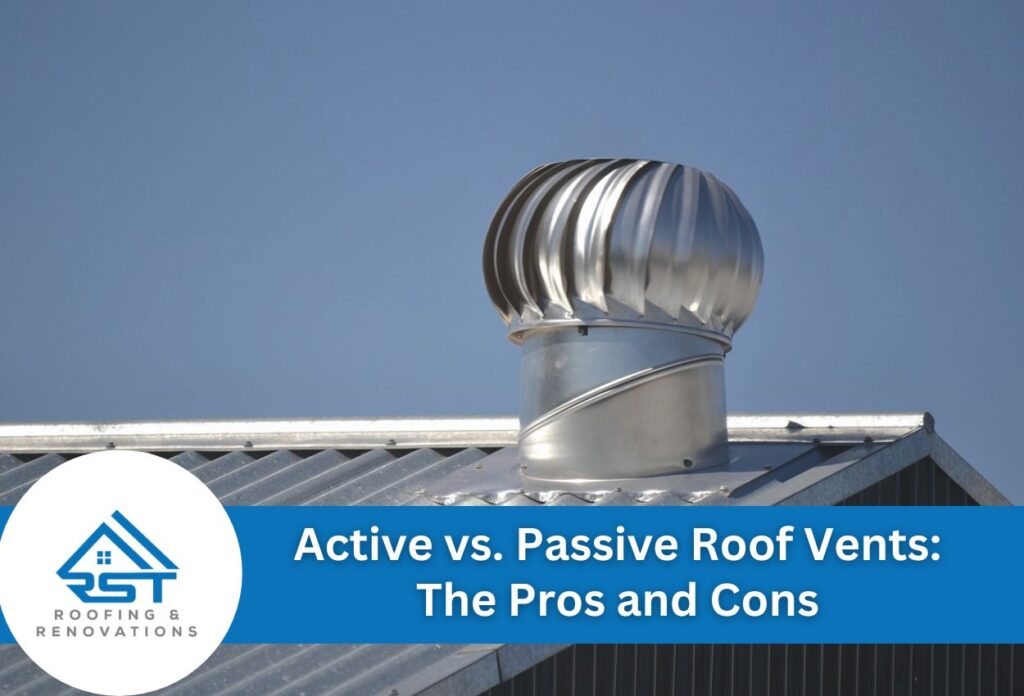
Static vents, including box vents and turbine vents, provide additional exhaust points across the roof surface. In Georgia’s climate, passive systems can be particularly effective during the summer when temperature differences between the attic and outdoors create strong thermal convection currents. The intense Atlanta heat actually enhances this natural chimney effect, as hotter attic air rises more aggressively.
However, during periods of extreme humidity or on particularly still days, passive systems may work more slowly than powered alternatives. Many Atlanta roofing professionals recommend a balanced passive approach, combining properly sized soffit and ridge vents to create consistent airflow paths across the entire attic.
Active Roof Ventilation: Power-Assisted Performance
Active roof ventilation systems take attic airflow to the next level by incorporating mechanical assistance to forcibly move air regardless of external conditions. Powered attic fans, typically installed on the roof’s surface or gable end, use electric motors to pull hot air out of the attic space at a much higher volume than passive systems can achieve. This mechanical advantage becomes particularly valuable during Atlanta’s sweltering summer months when attic temperatures can soar well above 150 degrees.
Solar-powered vents represent an increasingly popular option for Atlanta homeowners seeking enhanced ventilation without increased utility costs. These units feature integrated solar panels that convert abundant Georgia sunshine into a free power source. When properly sized and positioned, solar vents can extract extremely hot air while consuming zero electricity from the power grid.
Whole-house fans provide ventilation by pulling air through the entire home and exhausting it through the attic. This creates a cooling effect throughout the living space while simultaneously ventilating the attic. The amount of power that these active systems require varies significantly based on motor efficiency and usage patterns. Modern units often incorporate thermostats and humidity sensors to operate only when needed, maximizing efficiency.
For Atlanta homes with limited roof design options or those in particularly sheltered locations where natural airflow is restricted, active ventilation can provide consistent performance regardless of weather conditions or architectural constraints.
Comparing Costs and Long-Term Value
When evaluating roof ventilation options for your Atlanta home, understanding the financial implications beyond the initial price tag is essential. Passive ventilation systems typically require a lower upfront investment since they don’t include electrical components, motors, or complex installation requirements. Ridge vents and soffit combinations, the most common passive solution, generally involve straightforward installation during a roof replacement or as an addition to existing structures.
Active ventilation systems require a higher initial investment due to their mechanical components, wiring requirements, and potentially more complex installation process. However, this price difference needs to be weighed against potential performance benefits, especially in Georgia’s challenging climate, where effective attic ventilation directly impacts cooling efficiency.
Maintenance considerations significantly affect long-term value. Passive systems have virtually no moving parts to wear out, typically lasting the entire lifespan of your roof with minimal maintenance beyond occasional cleaning. Active systems require periodic maintenance to ensure motors, fans, and electrical components continue operating efficiently. Most powered vents have expected lifespans of 10 to 15 years before components may need replacement, which is shorter than the typical 20 to 30-year lifespan of common roofing materials.
Atlanta homeowners should also consider how ventilation affects other home systems. Proper attic ventilation, whether active or passive, can extend shingle life by reducing heat buildup and moisture damage, potentially saving thousands in premature roof replacement costs. The right ventilation solution protects your entire roofing investment while contributing to overall home efficiency.
Climate-Specific Considerations for Atlanta Homeowners
Atlanta’s unique climate creates specific ventilation challenges that directly impact the effectiveness of different roof ventilation systems. With summer temperatures regularly exceeding 90°F and humidity levels averaging 70% to 75%, Atlanta homes face intense heat buildup in attic spaces. This combination accelerates shingle deterioration and can dramatically increase cooling costs if it’s not properly managed through effective ventilation.
During hot summers, active ventilation systems offer powerful heat removal capabilities that can keep attic temperatures significantly closer to outdoor temperatures. Powered vents can extract super-hot air, even on windless days, when passive systems might underperform. However, passive systems such as properly designed ridge and soffit vent combinations often prove sufficient when correctly sized for Atlanta’s conditions, particularly in homes with adequate insulation and lighter-colored roofing materials.
Winter presents different challenges, as Atlanta experiences occasional cold snaps with temperatures dropping below freezing. During these periods, excessive ventilation can actually increase heating costs, while the wrong amount of ventilation might allow moisture to accumulate from indoor humidity sources. Passive systems provide consistent, moderate airflow that many roofing professionals consider ideal for Atlanta’s relatively mild winters, while active systems with thermostat controls offer adaptability to changing conditions.
The spring and fall seasons bring frequent changes in humidity that can lead to condensation issues. This is where balanced ventilation systems, whether they’re active or passive, prove particularly valuable by maintaining steady airflow that prevents moisture buildup while avoiding excessive heat loss or gain.
Installation Factors and Roof Compatibility
The structural characteristics of your roof play a significant role in determining which ventilation system will perform best for your Atlanta home. Steep-pitched roofs naturally create stronger convection currents, enhancing the effectiveness of passive ventilation. These roofs typically benefit most from ridge vents paired with sufficient soffit intake vents, as the height differential maximizes the stack effect that drives air movement. On the other hand, homes with low-pitched or complex roof designs often gain more from powered ventilation options that can overcome airflow limitations.
Existing roofing features also impact installation decisions. Homes with open ridge lines and enough soffit space allow for a straightforward passive system installation, often completed during regular roof replacements. However, powered vent installation typically requires electrical work, roof penetrations, and sometimes interior access for wiring. Atlanta roofing professionals must consider factors like attic accessibility, electrical panel capacity, and positioning for optimal airflow when installing active systems.
Older Atlanta homes may present unique challenges, as original construction might lack proper intake ventilation or have insufficient space for modern passive systems. In these cases, strategically placed powered vents often provide the most practical solution without requiring extensive structural modifications. For new construction or complete roof replacements, integrated passive systems can be designed from the start, potentially offering the most cost-effective long-term performance for many Georgia homeowners.
Making Your Decision: Beyond the Pros and Cons
Deciding between active and passive roof ventilation isn’t always straightforward, especially for Atlanta homeowners facing the region’s unique climate challenges. The best solution often depends on your specific situation rather than a one-size-fits-all approach. Start by assessing your home’s size and layout, as larger homes with complex roof designs may benefit more from active ventilation’s consistent airflow, while simpler roof structures often perform well with properly balanced passive systems.
Consider your home’s current insulation quality and existing ventilation performance. If your attic consistently maintains temperatures within 10 to 15 degrees of outdoor air during summer, your passive ventilation may be adequate. However, if you’re experiencing extreme heat buildup or moisture issues despite adequate insulation, a powered solution might be necessary. Energy efficiency goals also matter; while active systems provide stronger ventilation, passive options require no electricity and operate silently year-round.
Many Atlanta homes benefit from hybrid ventilation approaches that maximize performance across all seasons. This might include a primary passive system with ridge and soffit vents, supplemented by a solar-powered fan that activates only during extreme heat conditions. Such combinations provide the reliability of passive ventilation with the boosted performance of active systems when needed most. Your trusted Atlanta roofing contractor can evaluate your specific home conditions and recommend a custom ventilation strategy that balances efficiency, performance, and long-term value.
Choose the Best Roof Ventilation for Your Atlanta Home with RST Roofing and Renovations, LLC
Deciding between active and passive roof vents is crucial for maintaining the efficiency and longevity of your roof, especially in Atlanta’s challenging climate. Whether you prefer the energy-efficient operation of passive vents or the enhanced control of active systems, RST Roofing and Renovations, LLC can help. To discuss the best ventilation system for your home and to explore our installation services, call us today at (404) 548-8901.