


TPO roof seam repair stands as one of the most critical maintenance tasks for commercial property owners dealing with thermoplastic polyolefin roofing systems. These single-ply roof systems rely heavily on properly sealed seams to maintain their waterproof barrier, yet seam failures represent the leading cause of leaks in TPO installations across commercial buildings.
Thermoplastic roof sealing problems typically develop when the welded joints between membrane sheets begin to separate due to thermal expansion, poor installation, or natural aging. Property managers often notice the first warning signs during routine inspections:
- Visible gaps along seam lines
- Water stains on interior ceilings
- Membrane lifting at connection points
Understanding when TPO membrane repair can address these issues through standard maintenance or when issues need professional intervention makes the difference between minor repair costs and extensive interior damage. Simple seam separations caught early often respond well to proper TPO welding techniques and commercial roof leak repair methods. However, widespread seam failure across multiple areas typically signals the need for a more in-depth single-ply roof maintenance approach.
Recognizing these problems early allows property owners to take swift action, preventing minor seam issues from escalating into expensive structural damage that affects building operations and tenant satisfaction.
Identifying Different Types of TPO Seam Failures and Their Root Causes
Effective TPO roof seam repair begins with accurately identifying the specific type of failure occurring on the membrane. Visual inspection techniques reveal distinct patterns that help distinguish between minor surface issues and more serious structural problems requiring comprehensive thermoplastic roof sealing solutions.
Surface-level seam separations typically appear as thin, hairline gaps along welded joints where the TPO membrane has pulled apart slightly. These failures often result from normal thermal cycling, where daily temperature fluctuations cause the membrane to expand and contract repeatedly. Atlanta’s climate creates particular challenges with its hot summers and occasional freeze-thaw cycles that put stress on seam connections over time.
Deeper membrane problems show up as wider gaps with visible membrane curling or cracking around the edge of the seam. These issues frequently stem from inadequate initial TPO welding techniques during installation, insufficient surface preparation, or leaks that have compromised the roof deck beneath the membrane. The further water has gone past the TPO layer, the more complex the repair.
Environmental factors like UV exposure, ponding water, and debris accumulation accelerate seam deterioration. Single-ply roof maintenance inspections should focus on areas where seams intersect with gaps, roof edges, and drainage components, as these locations experience the highest levels of stress. Properly identifying types of failures ensures appropriate TPO membrane repair methods are selected for lasting results.
Essential Tools and Materials Needed for Effective TPO Membrane Repair
Successful TPO roof seam repair requires specific professional-grade equipment designed for thermoplastic roof sealing. Heat welding guns serve as the primary tool for creating permanent bonds between membrane sections, with temperature control capabilities ranging from 400 to 800 degrees Fahrenheit. Silicone rollers apply consistent pressure during the welding process, ensuring proper adhesion while preventing overheating that can damage the TPO membrane.
Pressure testing equipment verifies seam integrity after completing commercial roof leak repair. Seam probe tools detect incomplete welds or weak spots that could develop into future failure points. Single-ply roof maintenance also demands measuring devices for accurate overlap calculations and cutting tools specifically designed for TPO materials.
Material selection plays an equally important role in achieving lasting repairs. TPO patching materials must match the existing membrane thickness and formula to ensure compatible thermal expansion rates. Cleaning primers should also be used, as they remove contaminants and prepare surfaces for the best possible bonding, while specialized sealants provide additional protection around complex details and gaps.
Quality TPO welding techniques depend on using manufacturer-approved materials that maintain warranty compliance. Incompatible products can cause chemical reactions that weaken seam bonds over time. Luckily, professional contractors typically maintain relationships with multiple suppliers to ensure access to matching materials for various TPO membrane systems, regardless of the original manufacturer or installation date.
A DIY Process for Small TPO Seam Repairs
Proper preparation forms the foundation of successful TPO roof seam repair work. Begin by thoroughly cleaning the area in need of repair using approved TPO membrane cleaners that remove dirt, grease, and oxidation without damaging the thermoplastic material. Allow adequate drying time before proceeding, as moisture trapped beneath patches will compromise the bond and lead to premature failure.
Surface preparation requires carefully inspecting the substrate beneath damaged seams. Remove any loose debris or deteriorated membrane material, then ensure the area remains completely dry. Temperature considerations play a crucial role in thermoplastic roof sealing success. Ambient temperatures should remain between 40 and 85 degrees during application, with low humidity conditions preferred for the best possible results.
Safety precautions during single-ply roof maintenance include wearing appropriate personal protective equipment and ensuring adequate ventilation when using cleaning solvents. Keep in mind that heat welding equipment requires careful handling to prevent burns or membrane damage from excessive temperatures.
Application timing affects the quality of the bond significantly. TPO welding techniques work best when membrane temperatures remain stable throughout the repair process. Avoid repairs during extreme weather conditions or when rapid temperature changes are forecast.
Professional TPO Welding Techniques for Major Seam Restoration
Hot air welding represents the gold standard for professional TPO roof seam repair when dealing with extensive membrane failures that exceed the scope of basic maintenance procedures. This advanced thermoplastic roof sealing method uses specialized equipment that delivers precisely controlled heated air, typically between 500 and 600 degrees (though the equipment ranges are 400 to 800 degrees), to create molecular bonds between TPO membrane surfaces that match the strength characteristics of original factory seams.
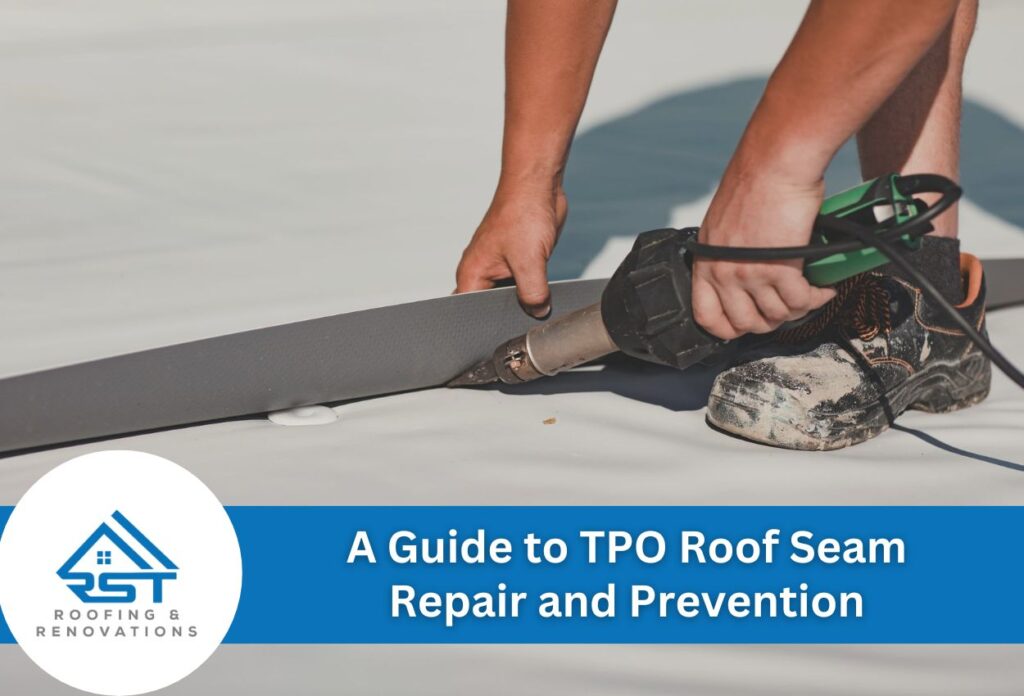
Professional roofing contractors employ automatic welding machines for long seam runs, ensuring consistent temperature distribution and uniform pressure application throughout the bonding process. Hand-held welding guns provide precision control for detailed work around gaps and complex roof shapes. The TPO welding techniques require simultaneous heat and pressure rolling to achieve proper membrane fusion without overheating, which can compromise the integrity of the material.
Quality testing procedures validate how effective repairs were through multiple verification methods. Pressure testing involves inserting a probe into the seam and applying controlled air pressure to detect any incomplete welds or weak spots along the repair area. Visual inspection standards require contractors to examine seam edges for proper overlap dimensions, consistent weld width, and absence of charring or membrane damage from excessive heat exposure.
Preventive Maintenance Strategies to Avoid Future Seam Problems
Implementing preventive maintenance programs significantly reduces the frequency and the severity of TPO roof seam repair needs while extending the lifespan of the membrane. Regular inspection schedules should include evaluations twice a year, typically conducted in spring and fall when weather conditions allow thorough examination of all seam connections. These systematic reviews focus on identifying early warning signs before they develop into expensive commercial roof leak repair emergencies.
Seasonal maintenance tasks target specific threats that affect thermoplastic roof sealing integrity throughout the year. Spring inspections address winter damage from freeze-thaw cycles and ice formation that can put stress on seams. Fall preparations include cleaning drainage systems and removing debris that could trap moisture against vulnerable areas during colder weather. These proactive single-ply roof maintenance approaches prevent minor issues from escalating into major system failures.
Protective coatings provide additional defense against environmental factors that accelerate seam deterioration. Specialized TPO membrane treatments enhance resistance to UV radiation, thermal cycling, and chemical exposure while maintaining membrane flexibility. These preventive measures strengthen vulnerable connection points where standard TPO welding techniques may show signs of aging over time.
Documentation during routine inspections creates valuable maintenance histories that help predict when seam areas may require attention. Property managers benefit from tracking seam performance patterns, identifying problem areas that need frequent monitoring, and scheduling preventive repairs before emergencies develop.
When to Call Professional Roofers vs. Attempting DIY Seam Repairs
Safety considerations represent the primary factor in determining whether TPO roof seam repair work requires professional intervention or allows for property owner maintenance. Working with heat welding equipment for thermoplastic roof sealing creates the risk of significant burns, while rooftop conditions create fall hazards that demand proper safety training and equipment. Professional contractors maintain specialized insurance coverage and safety certifications that protect both workers and property owners during complex commercial roof leak repair projects.
Skill requirements for advanced TPO welding techniques exceed the capabilities of typical maintenance staff. Professional roofers possess extensive training in temperature control, pressure application, and material compatibility that ensures proper single-ply roof maintenance outcomes. Simple cleaning and minor patch applications may suit property management teams, while extensive seam restoration demands contractor expertise to maintain warranty compliance and prevent expensive mistakes.
Evaluating local roofing professionals requires verifying proper licensing, insurance coverage, and manufacturer certifications for TPO membrane work. Request references from recent commercial projects and confirm contractor experience with similar membrane systems. Quality contractors will provide you with detailed written estimates that specify materials, labor procedures, and completion timelines without requiring upfront payments.
Professional repair consultations should include comprehensive roof inspections that identify underlying causes of seam failures, not just surface symptoms. Experienced contractors explain repair options clearly, discuss warranty provisions, and provide realistic timelines for project completion. Expect thorough cleanup procedures and final inspections that verify repair quality through appropriate testing methods before considering the work complete.
Expert TPO Roof Seam Repair in Atlanta
If you’re facing issues with TPO roof seams, it’s crucial to address them quickly to avoid extensive damage to your property. At RST Roofing and Renovations, LLC, we specialize in both minor and major TPO seam repairs. Whether you need a quick fix or a comprehensive overhaul of your roofing system, our team of skilled professionals is equipped to handle all your needs.
Don’t let a small seam failure escalate into an expensive disaster. Regular maintenance and timely repairs are key to extending the life of your TPO roofing system. Call us today at (404) 548-8901 to schedule a consultation or to learn more about our TPO welding techniques and thermoplastic roof sealing solutions. Trust RST Roofing and Renovations, LLC to provide reliable and efficient service that ensures your roof remains in top condition.